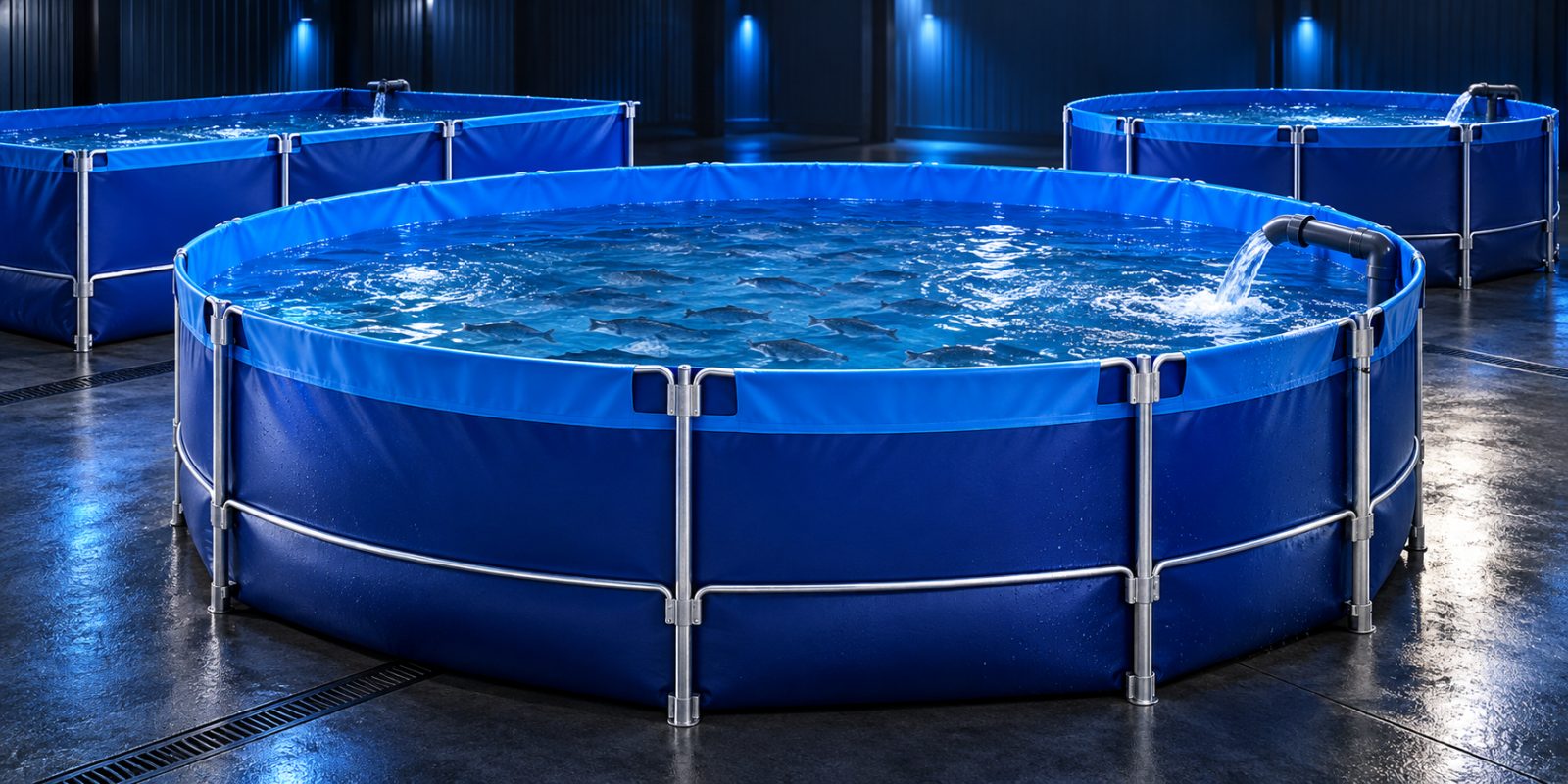
Pool covers
Protected pool throughout the season.
Manufacturing to exact dimensions
Sturdy tarpaulin 580 / 700 g/m²
Secure tension along the periphery
-
A completed form with the pool's dimensions (printed and photographed, or scanned)
-
A few photos of the pool — overview, the surrounding area, stairs and railings
-
A note on whether the dimensions are of the pool or of the finished cover
-
For an irregular shape — a physical template or a detailed dimensioned drawing
Rectangular
Oval / round
Irregular shape
With border
The cover also wraps part of the pool's side walls.
Pool length
Pool width
Extra overhang
Your cover will be: 560 × 360 cm

White
Silver
Blue
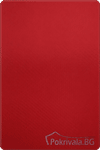
Red

Black
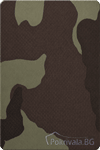
Camouflage

Light blue
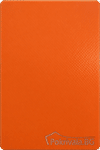
Orange

Yellow
Price:
incl. VAT
The price is calculated from the cover's area based on the dimensions entered.
Pool covers are made to your individual dimensions. The price is calculated from the cover's area based on the dimensions you enter.
Check carefully the dimensions you enter. See the detailed measuring instructions.
Contact us, if you have any questions.
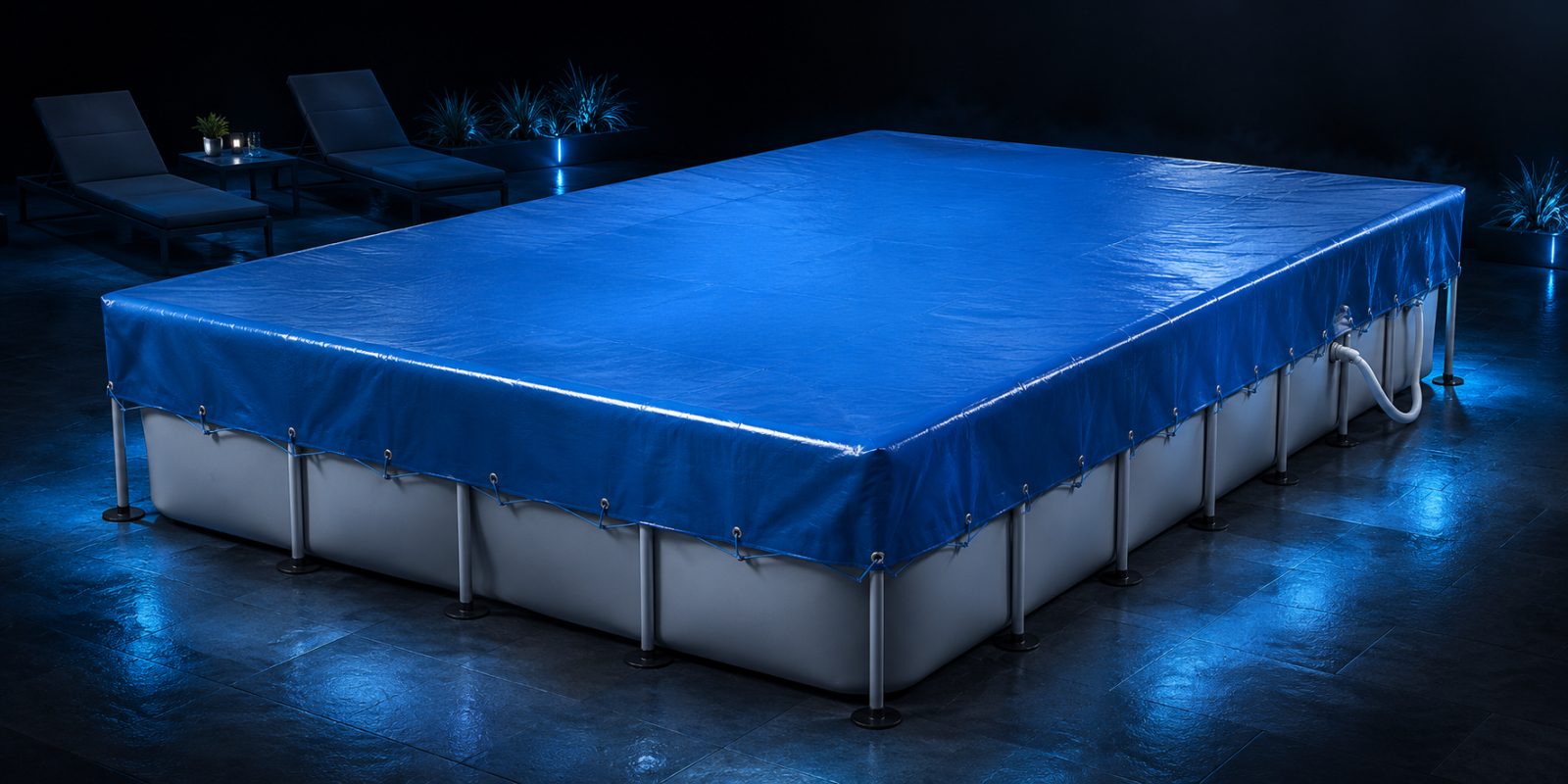
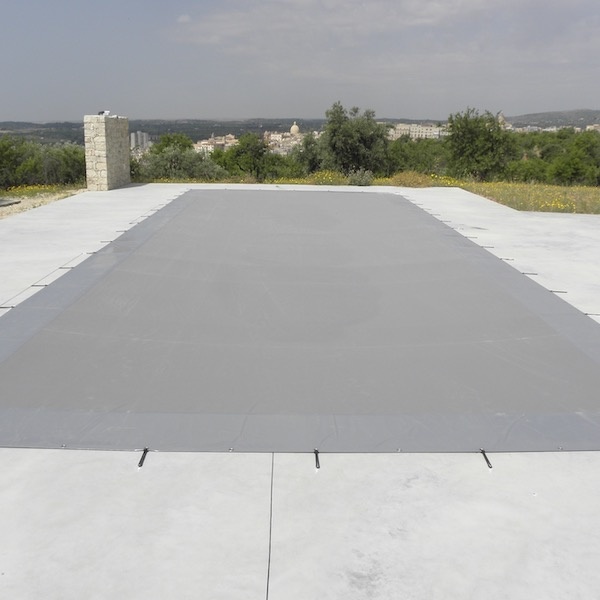
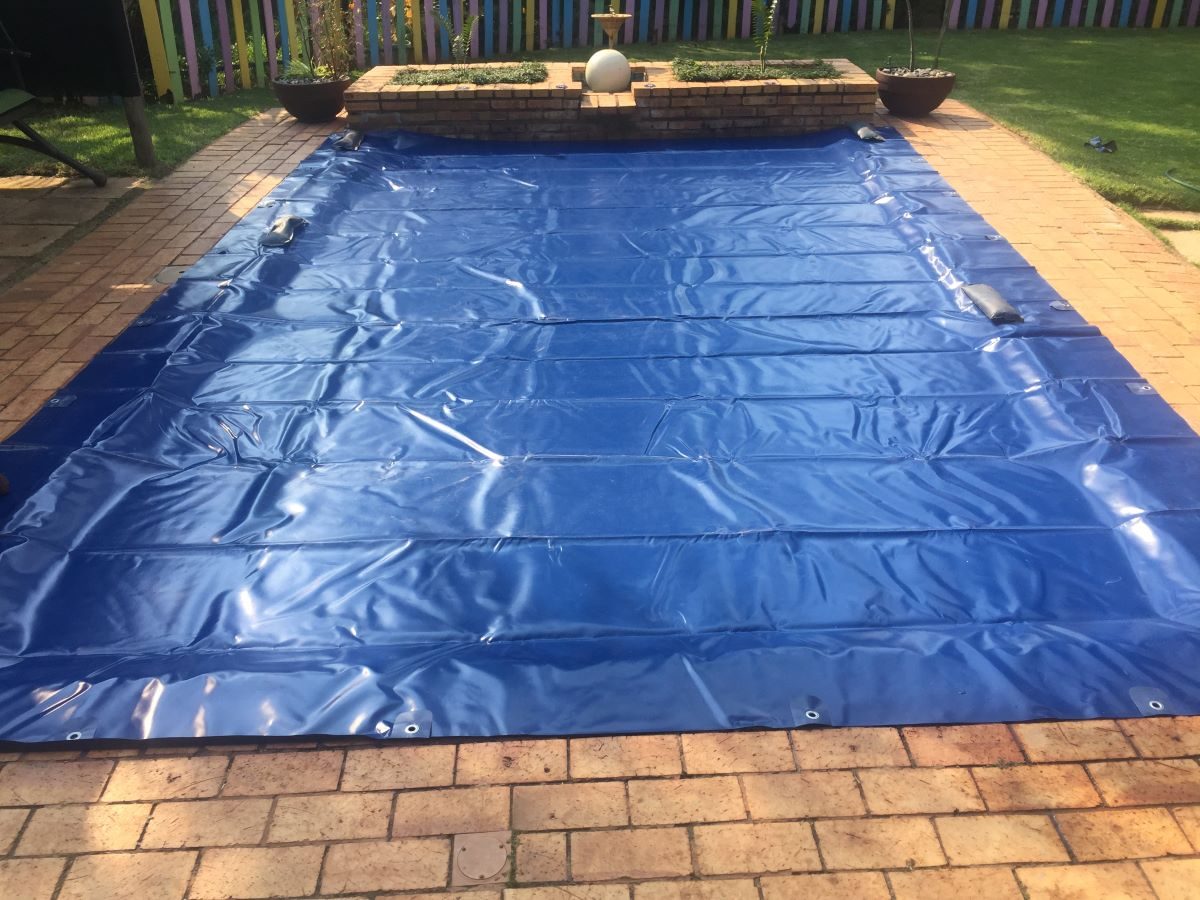
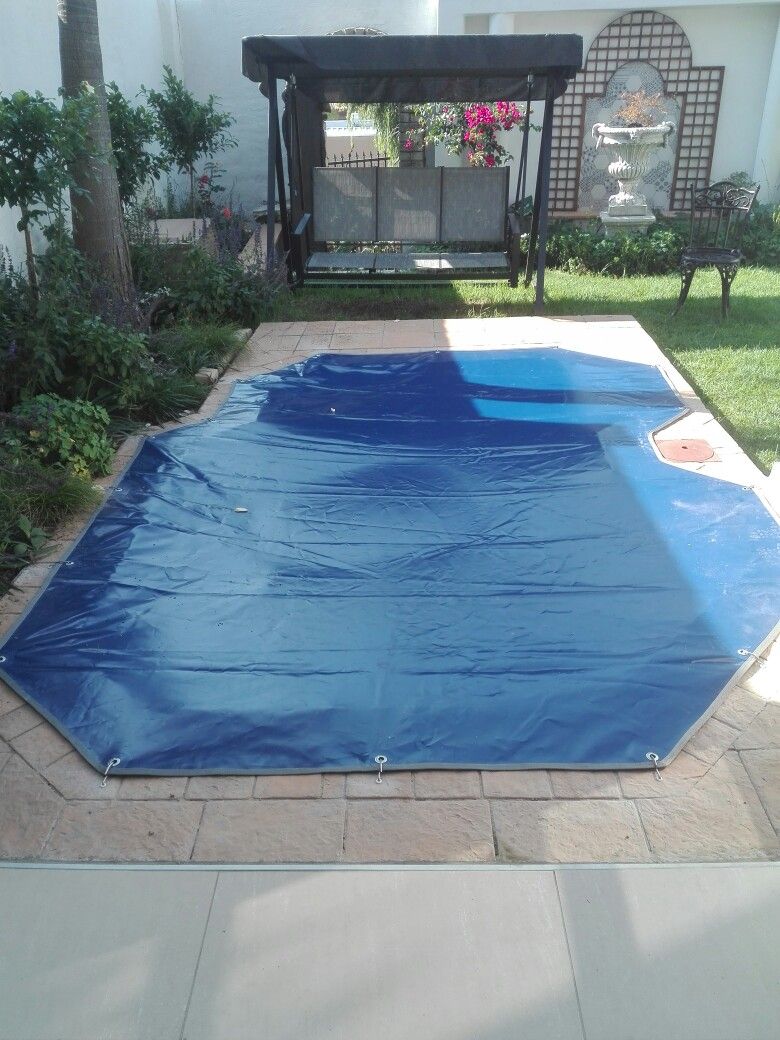
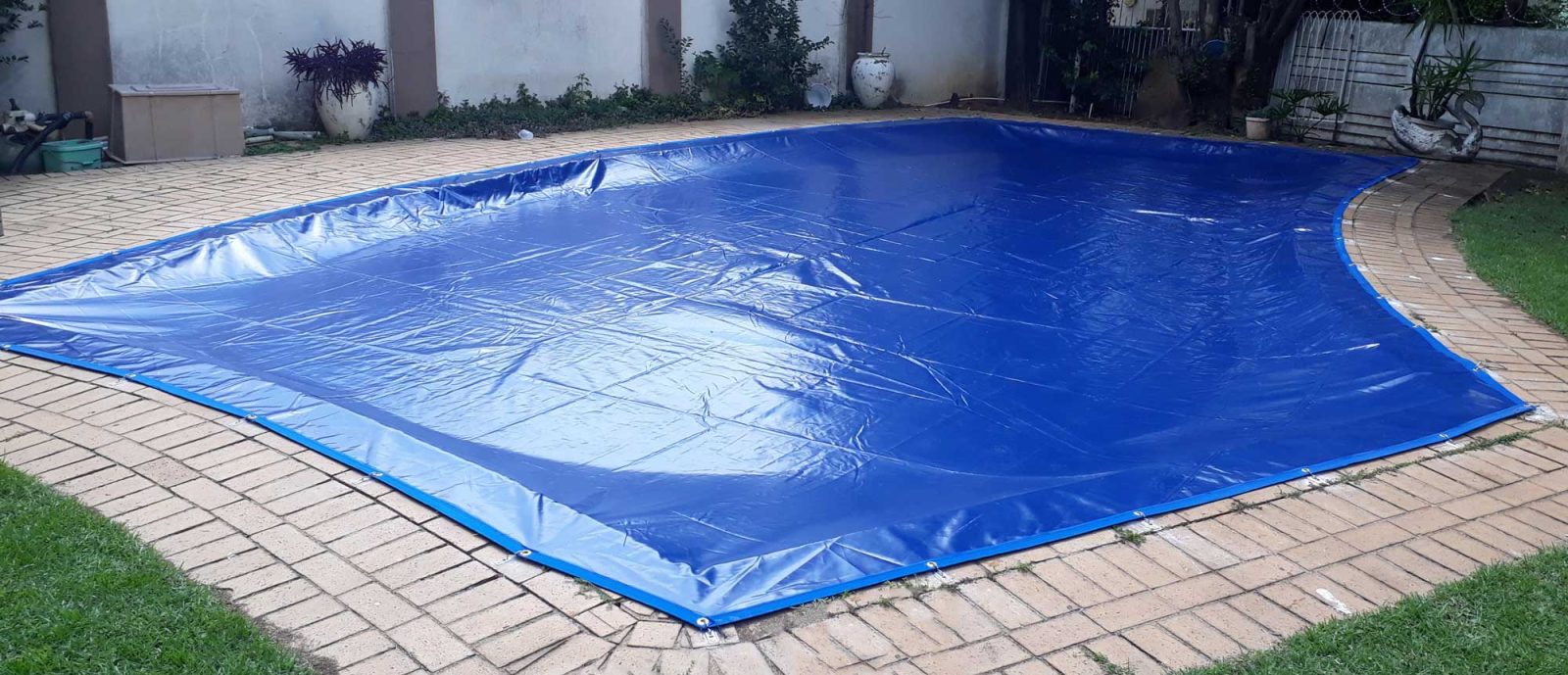
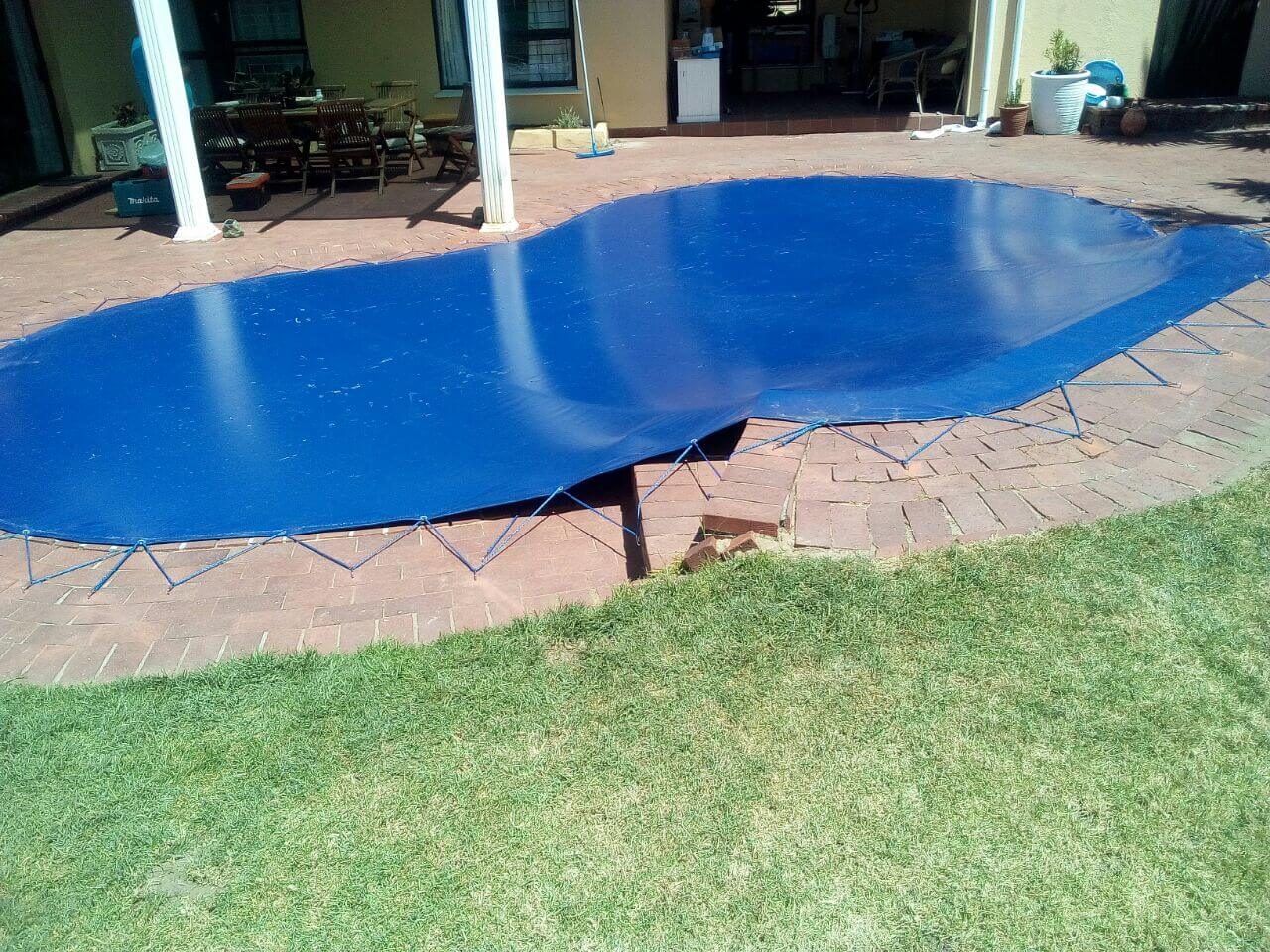
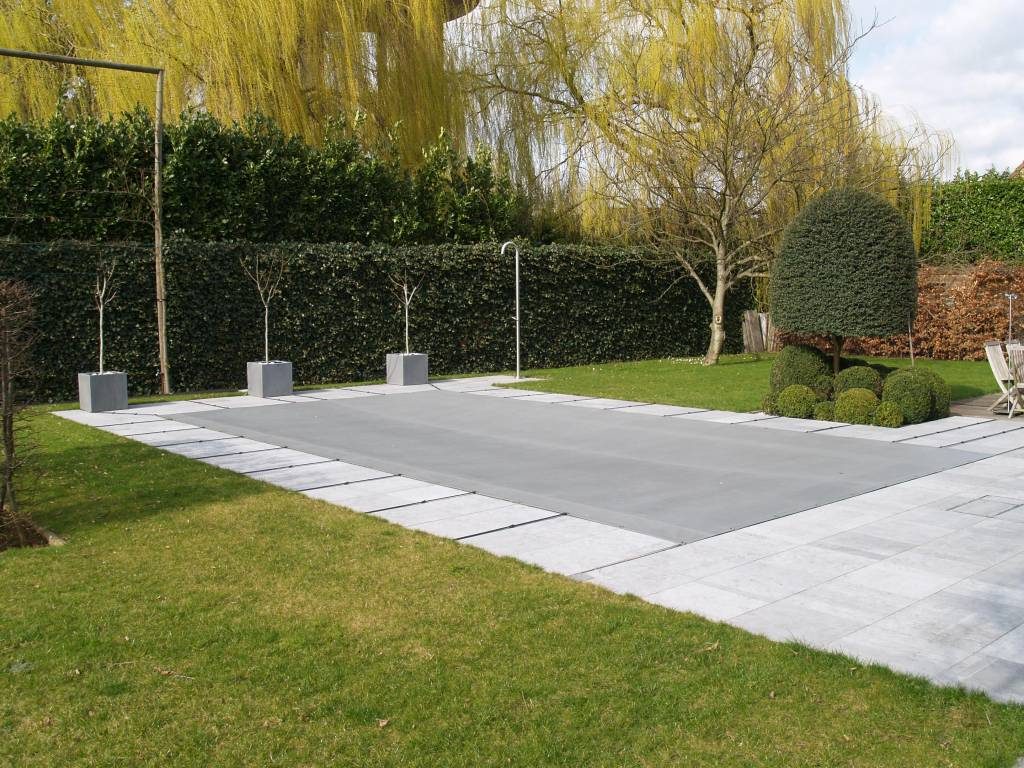
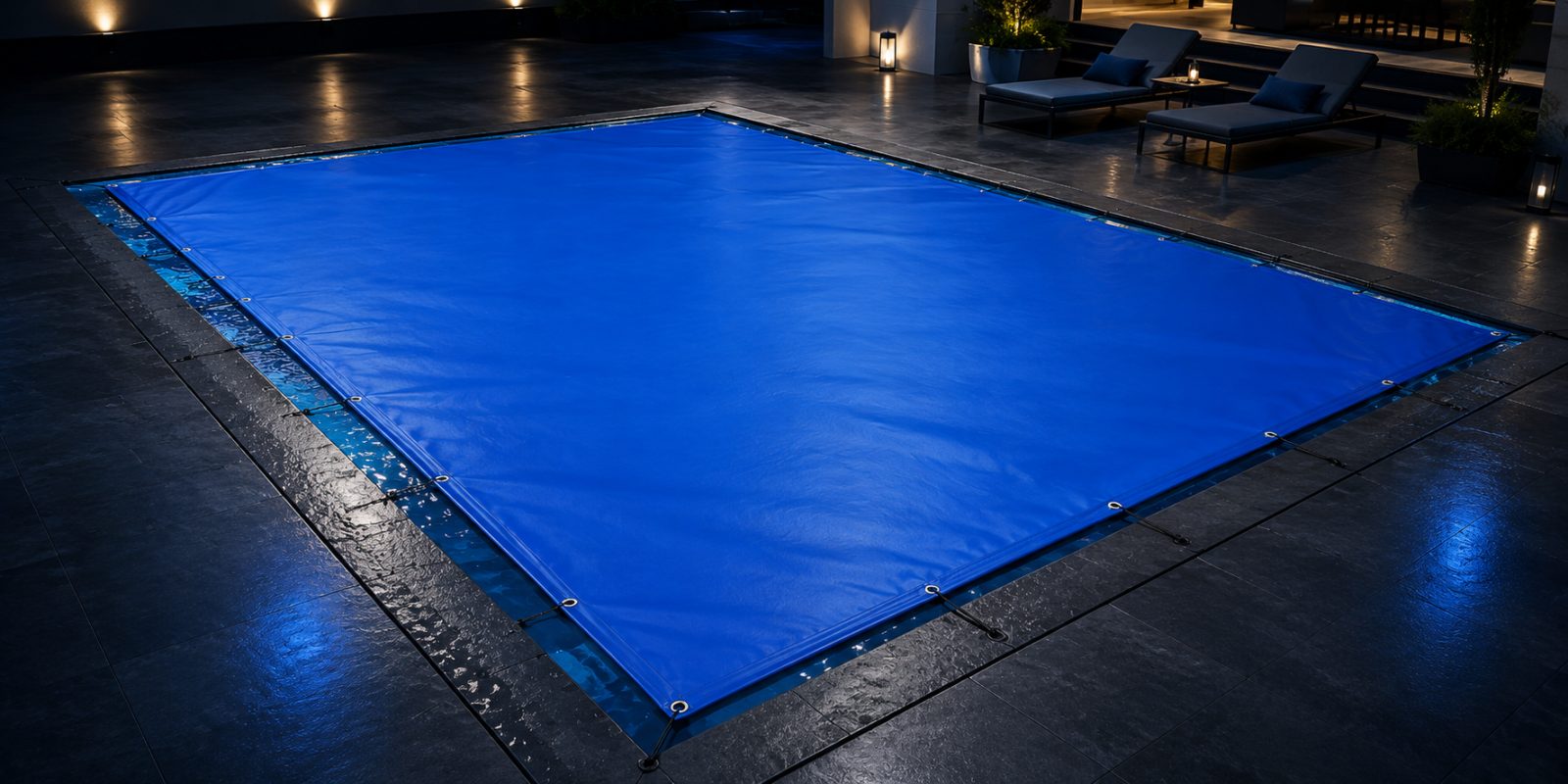
Winter pool covers are designed to cover and protect the pool during periods when it is not in use. We manufacture each cover in individual sizes , so that it is tailored to the shape, dimensions and construction method of the specific pool.
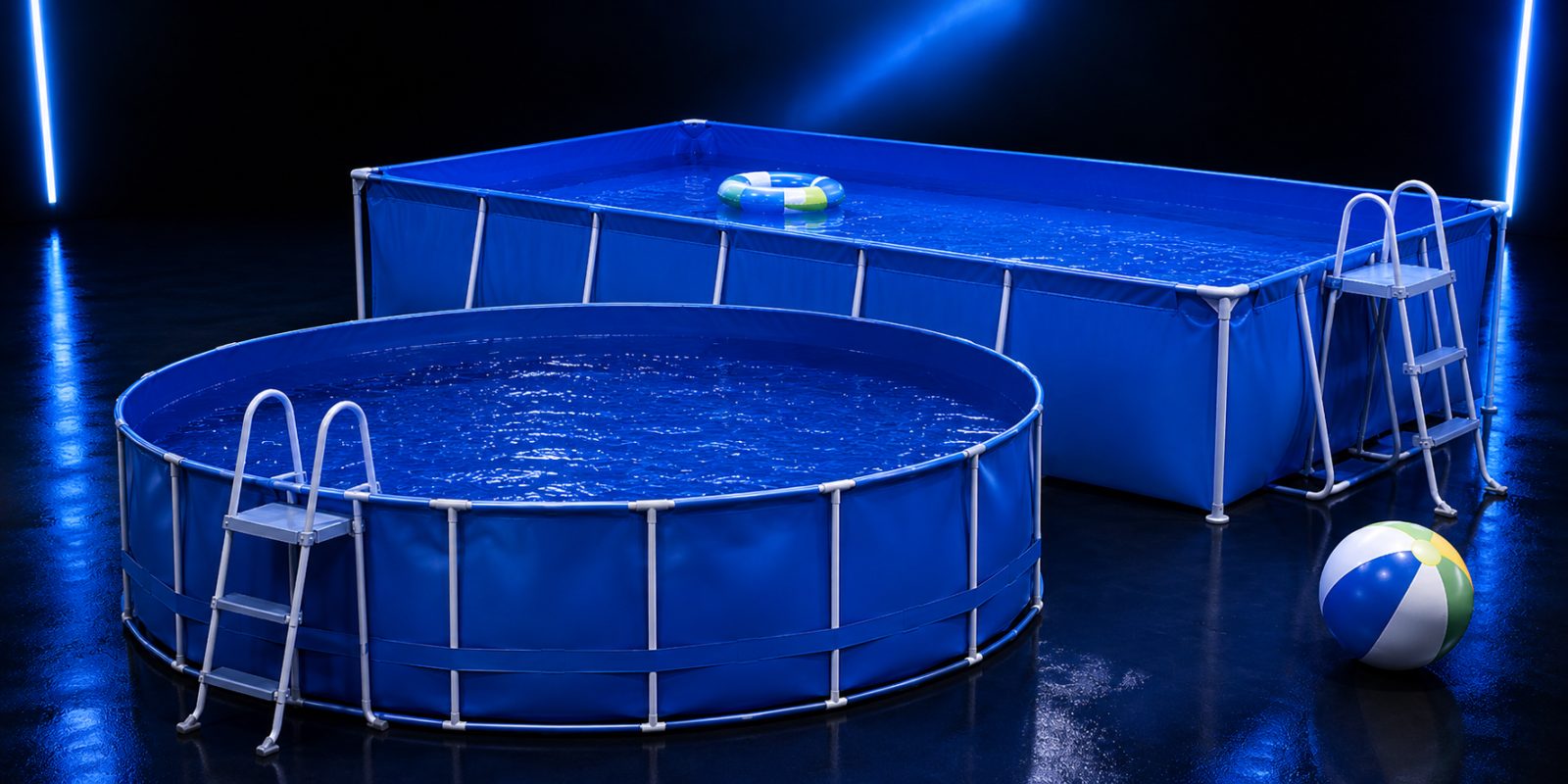
Covers can be rectangular, round, elliptical or completely irregular in shape. Depending on the design of the pool, they can be produced as a flat cover without a rim or as a cover with a rim / drop , which also covers part of the side walls.
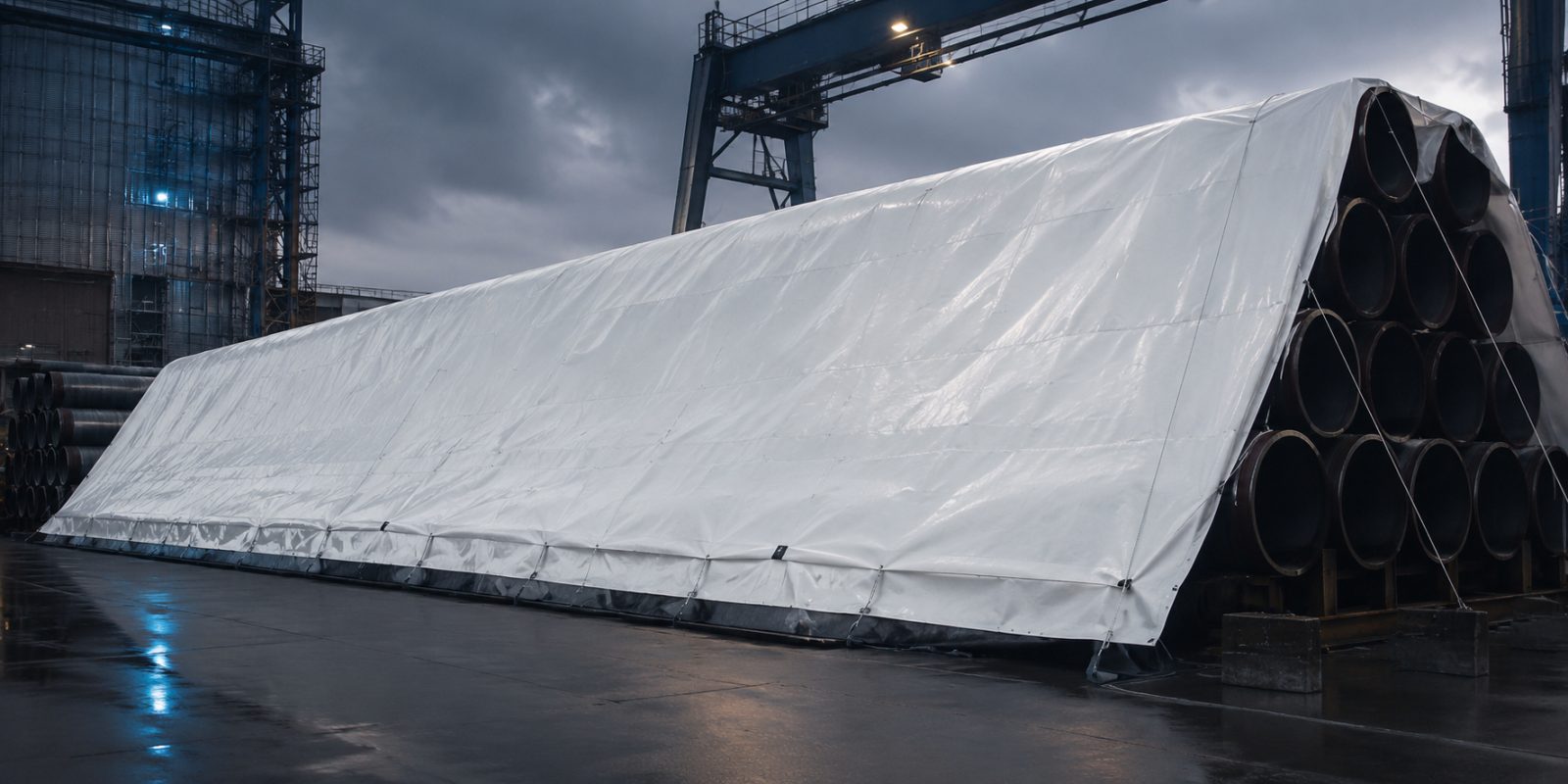
We make the covers from strong synthetic tarpaulin with a weight of 580 g/m² or 700 g/m² . The material is waterproof, reinforced and designed for long-term outdoor use.
A reinforced hem is made along the entire periphery, and metal rings Ø20 mm are placed in it as standard, approximately 50 cm apart . Through them, the cover is stretched and secured to anchors around the pool.
What is the winter cover for?
The main purpose of the cover is to limit the entry of: leaves, branches, dust, soil, insects, and other contaminants into the pool.
Thus, during the inactive season, the water and the pool itself remain significantly more protected, and its preparation for the next season is easier.
The cover is not a safety platform and is not intended for walking on . It should not be considered a certified safety cover against falling of people or animals.
Material
The covers are made of synthetic tarpaulin in two main versions.
Tarpaulin 580 g/m²
Suitable for standard covers that require a good balance between strength, weight and ease of installation and removal.
Tarpaulin 700 g/m²
A heavier and more massive material, suitable for larger sizes or when a stronger performance is preferred.
Both materials have strong textile reinforcement and do not fray like regular fabric.
Reinforced perimeter and metal rings
A hem is formed along the periphery of the cover, which reinforces the attachment area.
It includes the following as standard:
metal rings Ø20 mm every approximately 50 cm.
They distribute the tension points along the entire contour and allow for attachment with single elastics or with one continuous elastic cord.
Variants according to shape
We can produce:
Rectangular covers
For standard rectangular and square pools.
Round covers
By specified diameter.
Elliptical covers
Including the characteristic shape, geometrically composed of a straight section and two semicircles at the ends , without the cover actually being divided into separate parts.
Irregularly shaped covers
According to a template or detailed dimensional technical drawing.
All of these variants can be manufactured without a board or with a board , depending on the design.
Cover without a border
In this variant, the cover is a flat shape that is larger than the pool itself .
The additional peripheral part is necessary so that the cover can go over the edge of the pool and have room for it to stretch to the anchors.
Typically, approximately 20–50 cm extra is provided on each side , but the necessary overlap depends on the specific pool, the surrounding paving and the position of the anchors.
Cover with board
This option is suitable for pools whose upper edge or structure protrudes above the surrounding terrain.
The cover is shaped like a shallow box, open at the bottom :
The upper part covers the pool, and along the entire contour there is a vertical side part - a board .
Typically, the board is about 15–20 cm , but it can be produced with a different height.
The board is usually smaller than the height of the pool itself .
To ensure that the cover can be easily installed and removed and is not too tight on the structure, a small installation allowance (2cm) is provided for the pool dimensions.
How is the cover attached?
The cover is stretched with elastic ropes to anchors located around the pool.
It is important that the anchors are outside the perimeter of the cover , not right next to its edge. There needs to be a distance over which the elastic can stretch and create tension.
There are two main methods of fastening.
1. Separate elastic bands
A separate elastic rope is attached from each metal ring to its corresponding anchor.
The advantage is that each point can operate relatively independently of the others.
2. One continuous elastic band
A long elastic rope can be used, passing alternately between the cover and the anchors.
It goes around the entire periphery and passes in a zigzag pattern :
ring → anchor → next ring → next anchor, etc.
This results in a continuous tensioning system along the entire contour.
Anchors for fastening
For hard flooring , stainless steel anchors with a countersunk head can be used.
This option is especially convenient around a pool.
When the cover is used, the anchor is unrolled to the required position and the elastic is attached to it.
When the cover is removed, the anchor can be screwed all the way into its dowel .
The milling head allows it to be practically retracted to the level of the pavement. This way, there are no high protruding fasteners around the pool that a person can easily trip over.
Covering around stairs, railings and other profiles
In many pools, stairs or railings pass through the area to be covered.
In such cases, the cover can be cut from the periphery to the ladder profile directly on site by the customer .
This has an important advantage – the exact position of the cut is determined after the actual placement of the cover on the pool.
Reinforced synthetic tarpaulin does not unravel like ordinary textile fabric and allows for similar local adaptation.
The cuts must be made precisely and only as much as is necessary to pass around the profile.
Stretching the cover in winter
Proper tension is especially important with larger covers.
The tarpaulin should be evenly stretched , without one part of the periphery taking on a significantly greater load than the others.
Particular care is required when there is no immediate support under the cover.
Pool with water in winter
From the point of view of the cover itself, it is favorable that the water level is not too far from it.
When the cover sags slightly, it can "lie" on the water surface , which begins to support it from below.
So part of the load does not remain solely on:
the elastics;
the rings;
the periphery of the tarpaulin;
the anchors.
Whether a particular pool should be left full or partially full during the winter depends on both its construction and its manufacturer's instructions.
At lower water levels
If there is significant free space between the cover and the water surface, floating Styrofoam blocks can be placed in the water.
They can support the cover from below and limit excessive sagging.
This is an auxiliary solution, not a load-bearing structure for heavy loads.
With a completely empty pool
With a completely empty pool, the situation is different.
The cover remains over a large free opening with no support underneath.
With a small pool this may be less of a problem, but with large sizes the stresses on the tarpaulin and the anchoring can become significant.
It is a good idea to consider placing crossbars or suitable boards under the cover , approximately every 1.5 m.
They should support the tarpaulin over the pool and limit its collapse.
The distance of 1.5 m is approximate. The appropriate number, cross-section and strength of the supporting elements depend on the width of the pool and the expected load.
Snow accumulation
This is especially important in winter.
Snow accumulated on a large cover can create significant additional weight.
When sagging, the load is gradually transferred to:
the tarpaulin → the rings → the elastics → the anchors
Excessive load can lead to:
elastic breaking;
damage to a metal ring;
damage to the periphery around the ring;
severe sagging;
partial or complete collapse of the pool cover.
Therefore, large amounts of snow should not be left on an unsupported cover for long periods of time.
The covering is not a load-bearing roof.
Main advantages
Custom made
The pool does not need to be of standard factory dimensions.
Different shapes
Rectangular, round, elliptical and completely non-standard covers.
With or without board
Possibility of choosing according to the construction of the pool.
Tarpaulin 580 or 700 g/m²
Durable waterproof synthetic material.
Reinforced contour
Hem along the entire perimeter.
Metal rings Ø20 mm
Standardly spaced approximately every 50 cm.
Elastic fastening
With separate elastics or one continuous zigzag rope.
Adapting around stairs
Possibility of local cutting on site during installation.
Pattern making
A solution also for pools with very complex geometry.
Short product description
Winter pool cover in individual size made of synthetic tarpaulin 580 or 700 g/m². It is made in rectangular, round, elliptical or irregular shape, with or without a border. Along the periphery there is a reinforced hem and metal rings Ø20 mm every approximately 50 cm for tensioning with elastic ropes to anchors around the pool. Suitable for protecting the pool from leaves, dust and other dirt during the inactive season.
Rectangular, round, oval or fully custom covers — with or without a border, depending on the pool's construction.
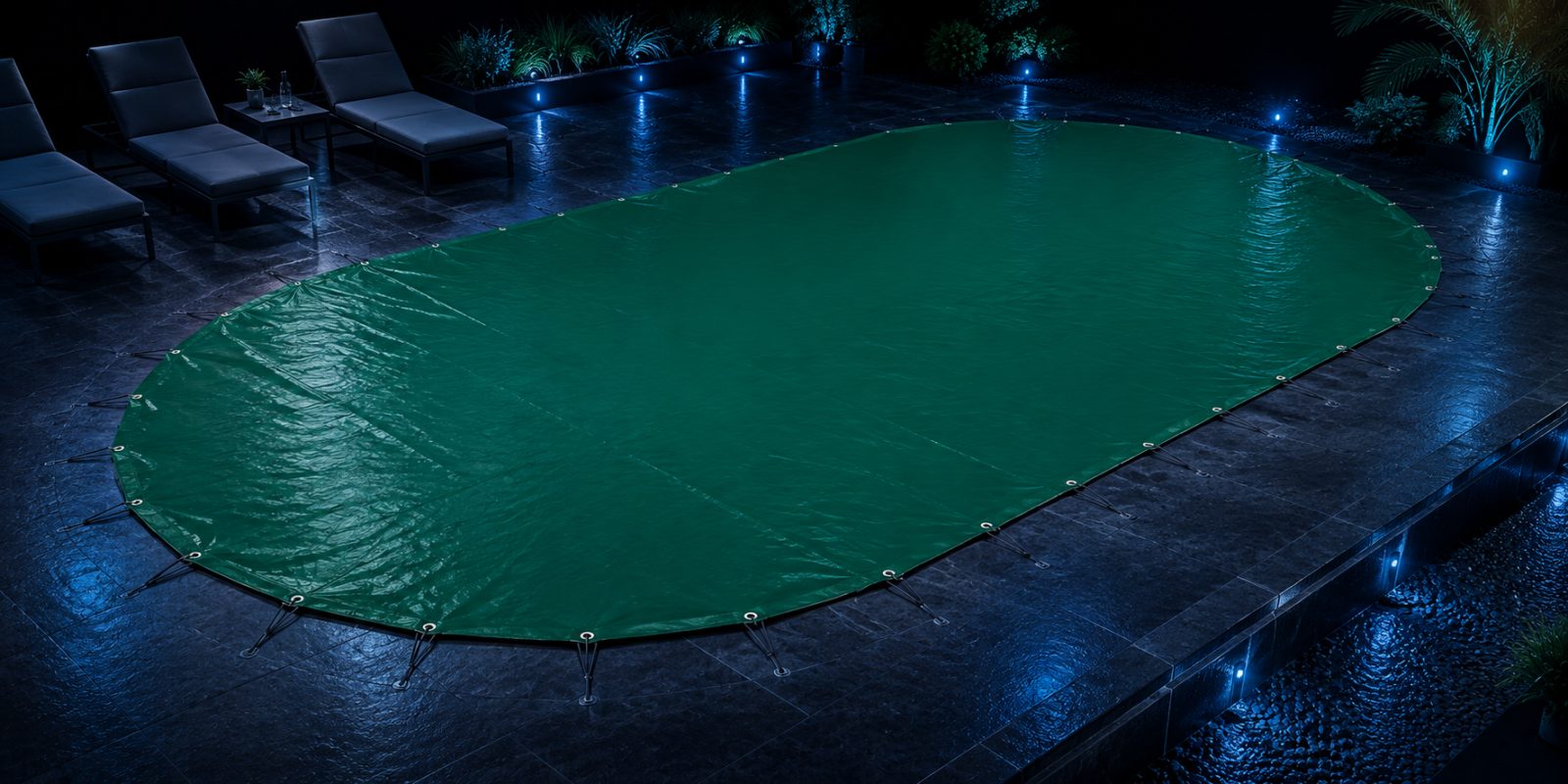
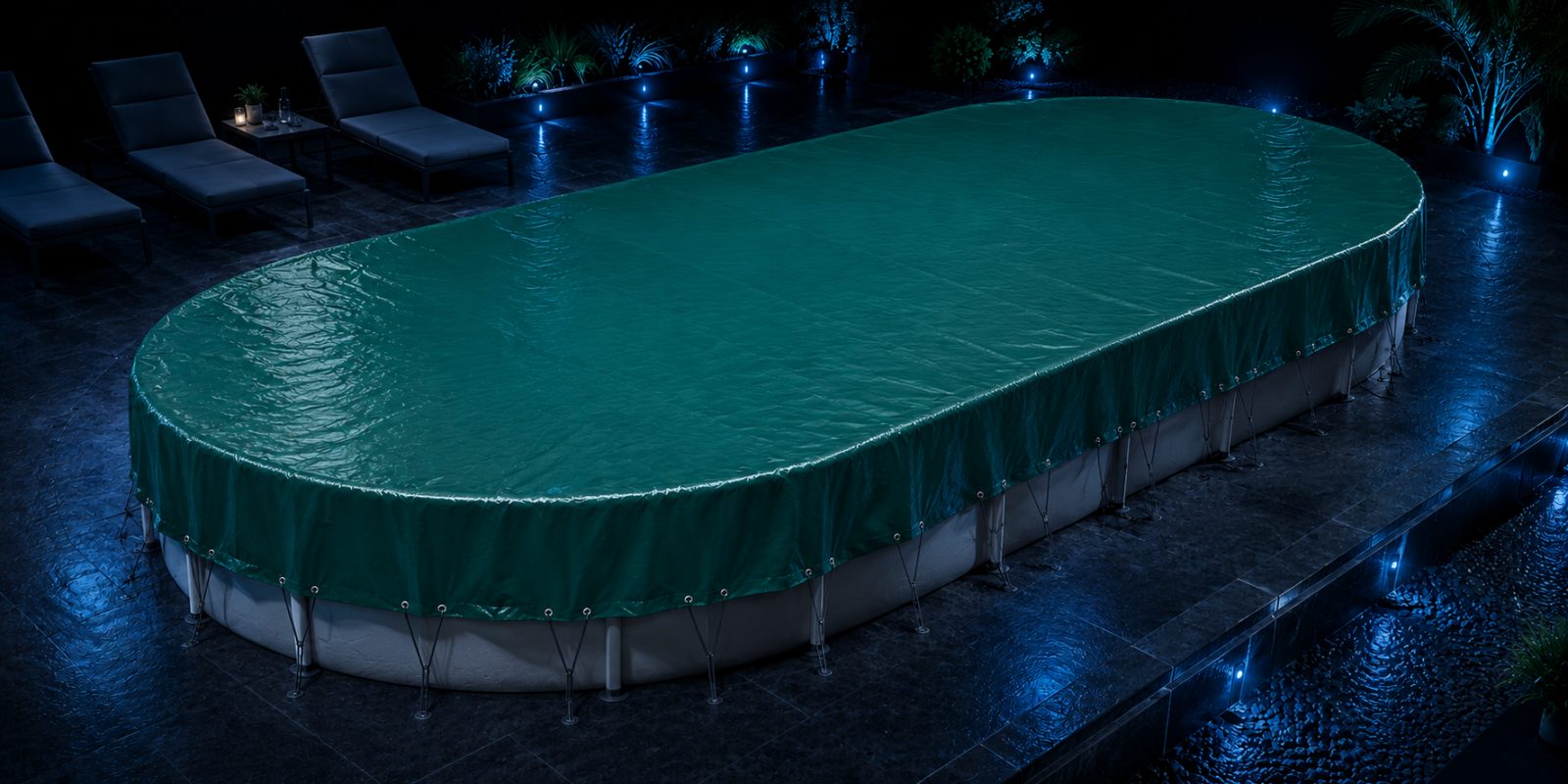
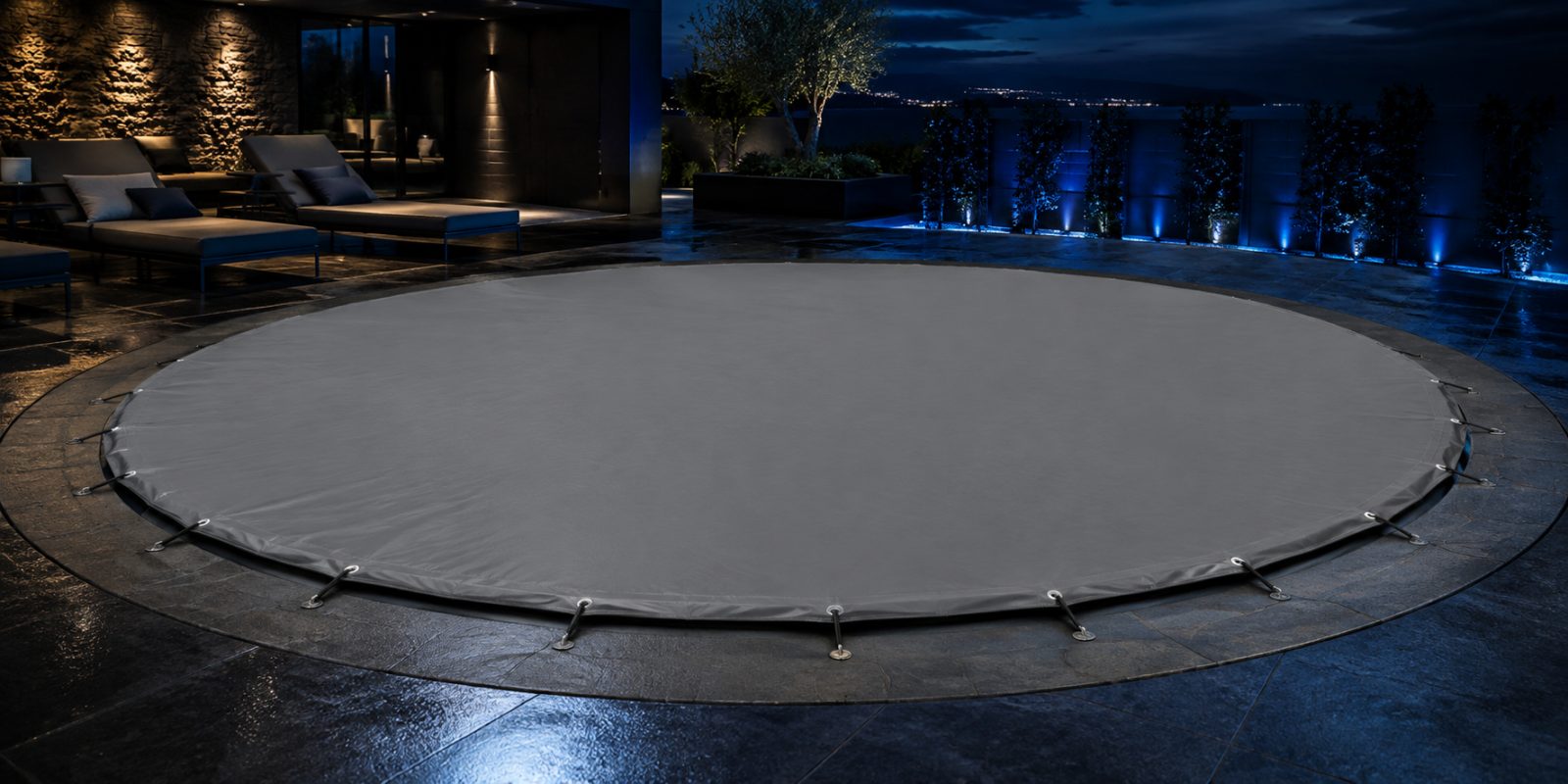
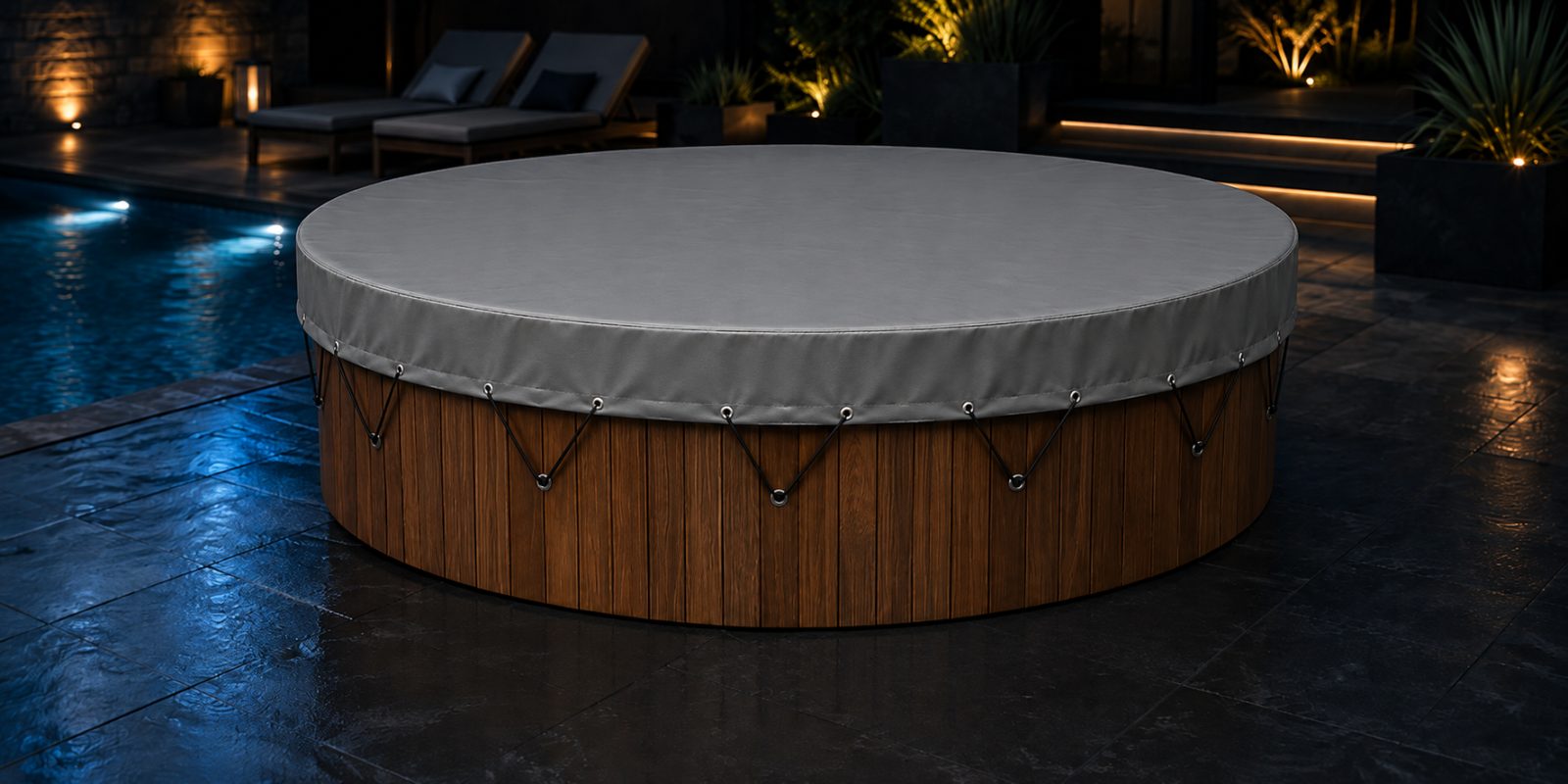
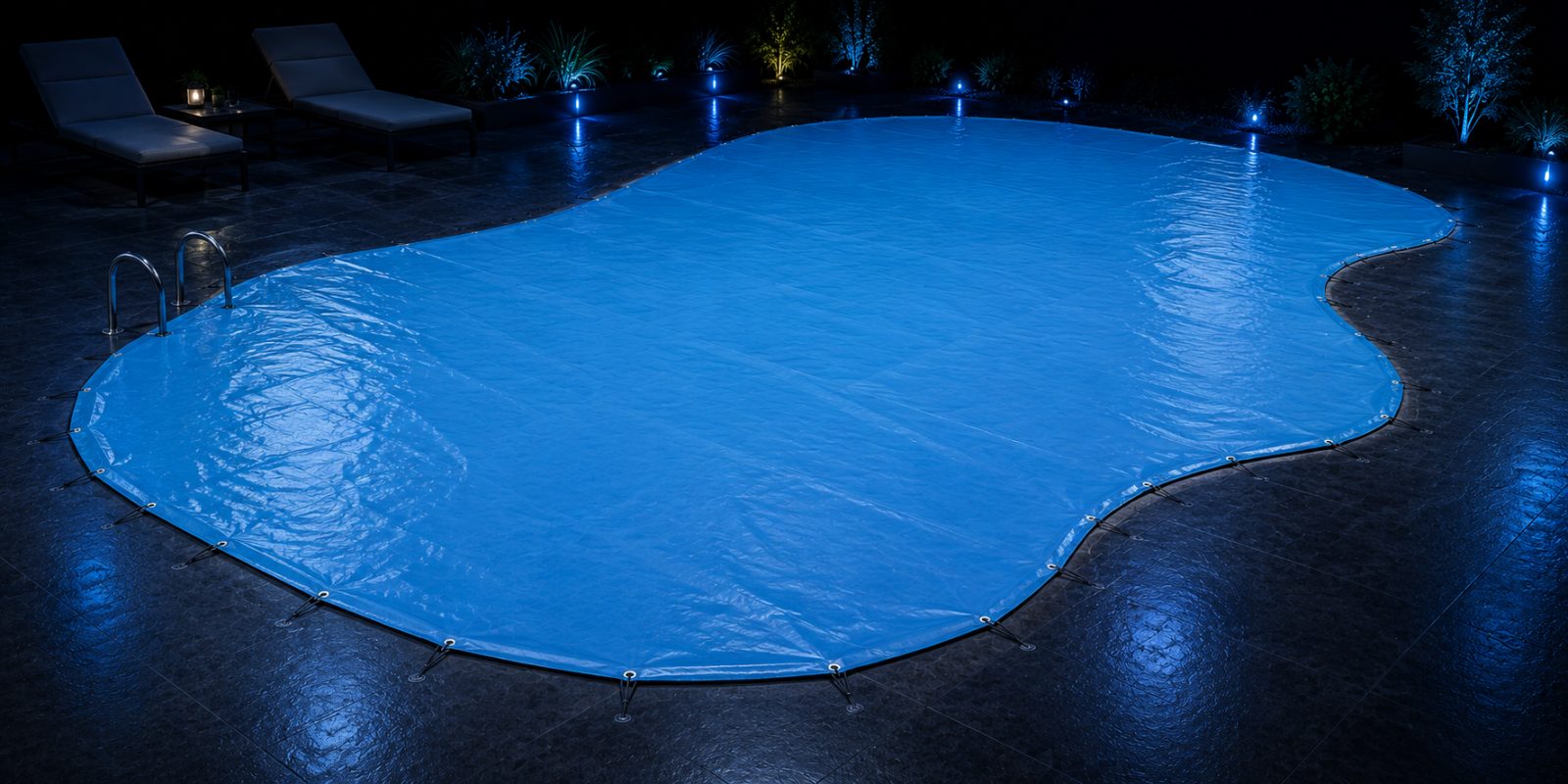
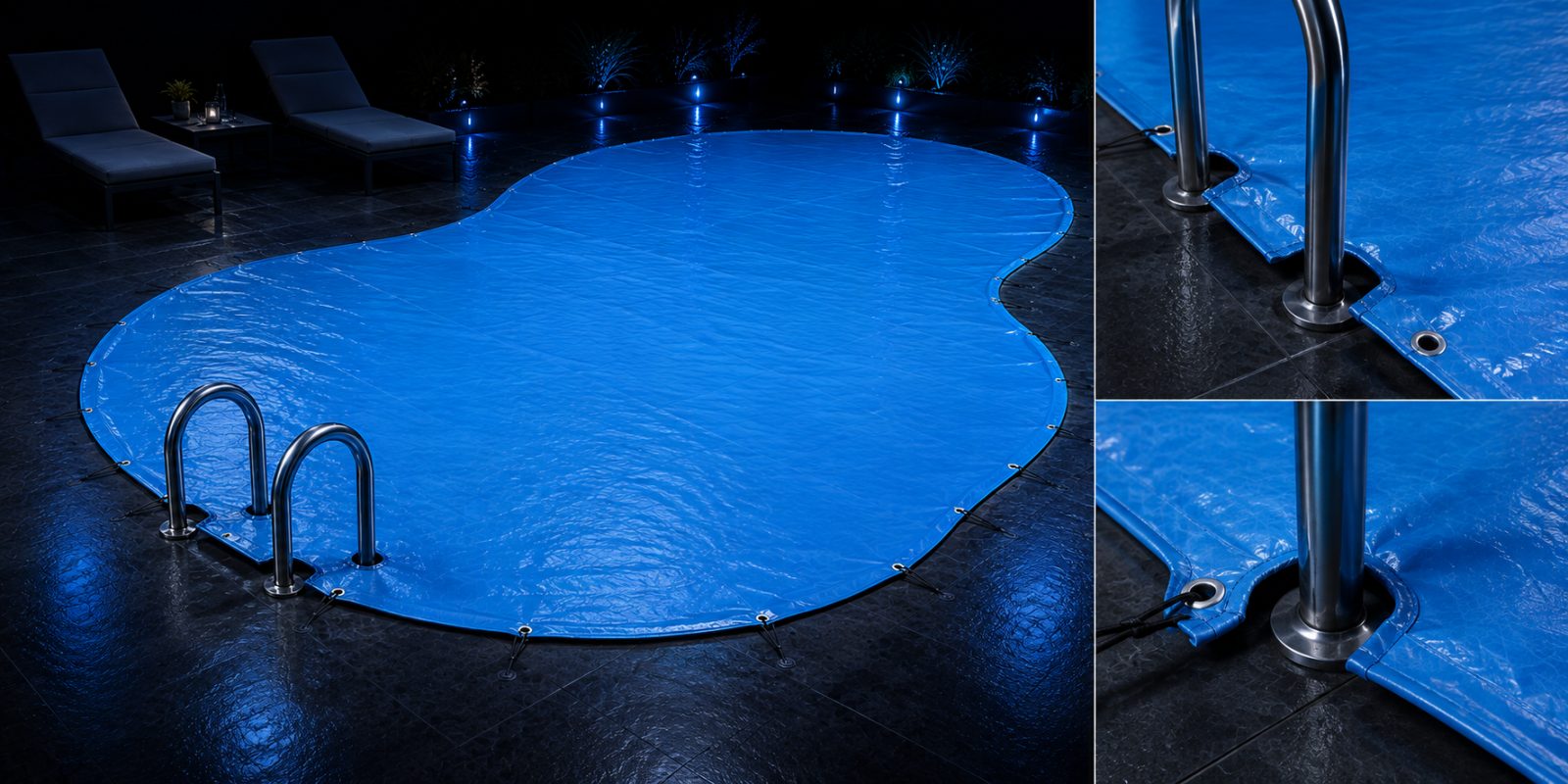
The cover is tensioned with elastic cords to anchors around the pool. The anchors must be outside the cover's perimeter — a distance is needed for the elastic cord to stretch and create tension. On a hard surface, stainless countersunk-head anchors are convenient — they retract flush with the surface when the cover isn't in use.
Individual elastic cords
A separate elastic cord runs from each metal eyelet to its own anchor — the tensioning points work independently of one another.
One continuous elastic cord
One long elastic cord runs in a zigzag between the eyelets and anchors around the entire perimeter — a continuous tensioning system.
-
The anchors must be outside the cover's perimeter, with enough distance for the elastic cord to stretch and create tension.
-
If the pool is left full, it's best for the water level not to be too far below the cover — it can rest lightly on the surface, which takes some load off the eyelets and anchors.
-
At a lower water level, floating polystyrene blocks can support the cover and limit sagging.
-
For a completely empty pool, it's best to place crossbeams or boards under the cover, roughly every 1.5 m.
-
Accumulated snow on a large unsupported cover can tear an elastic cord, damage an eyelet or cause the cover to sag through — don't leave snow on it for long.
The cover is not a safety platform for walking on and not a load-bearing roof — it is intended only for protection from leaves, branches, dust and other debris.
1
You enter the dimensions
You choose the shape and dimensions in the calculator to get an indicative price.
2
You send the form and photos
You print the appropriate form, mark the pool's real dimensions on it, and send it to us along with photos.
3
We confirm the details
We check the dimensions and confirm the colour, fastening method and, if needed, stairs and railings.
4
Manufacturing and delivery
We make the cover to the confirmed dimensions and ship it to you or hand it over on site.